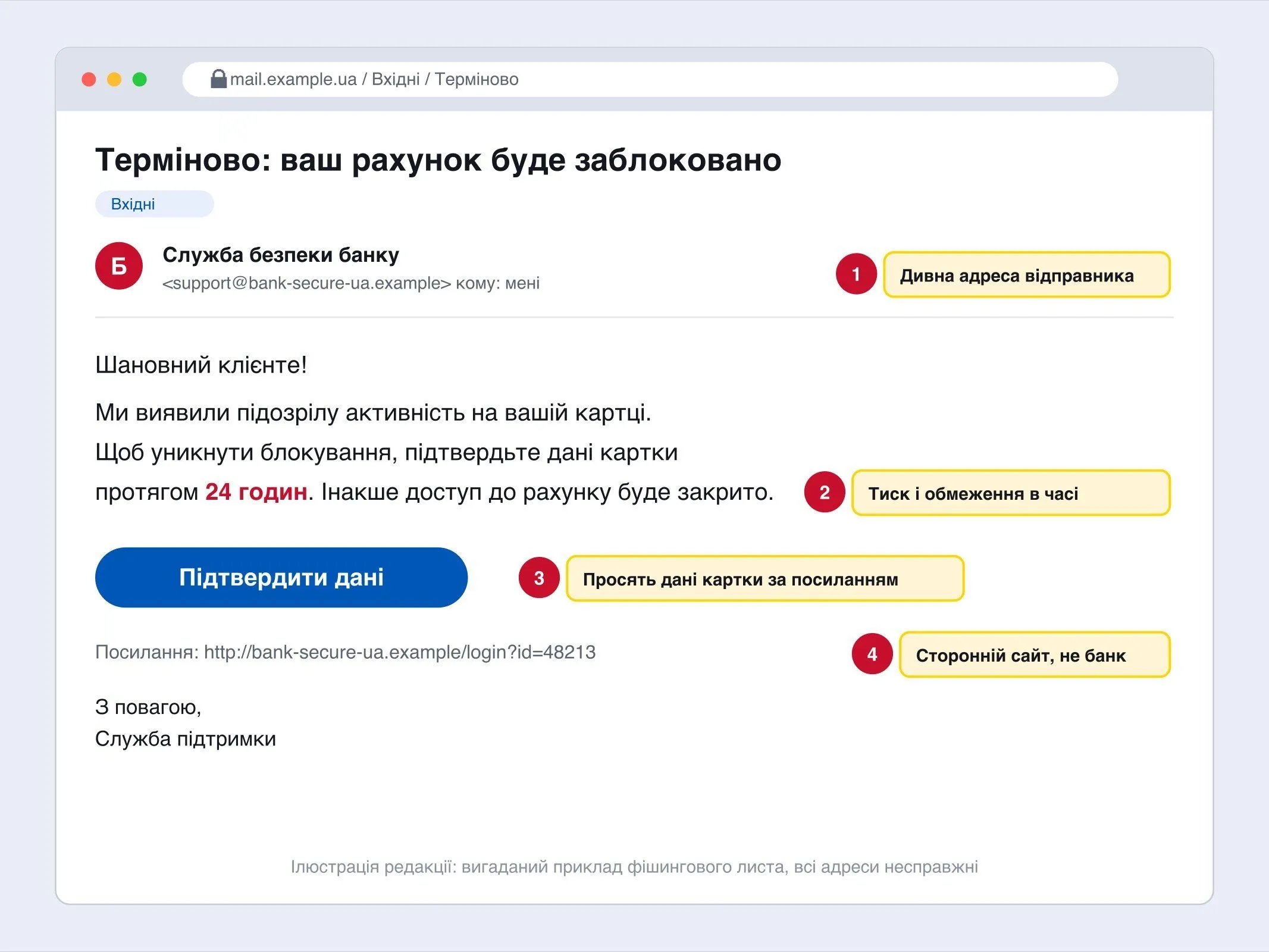
Phishing is an attempt to extract your data using fake emails, texts or websites. Messages look as if they come from a bank, the post office or a state body, but the goal is the same: to get access to your money or accounts.
Typical signs
- They scare you: “your card has been blocked”, “your parcel is held up”.
- They rush you: “you must act immediately”.
- They contain a suspicious link with an odd address.
- They ask you to enter card details, a password or a code from a message.
- They have mistakes in the text or a strange sender.
How to check
- Do not follow the link. Open the bank’s site or app yourself.
- Hover over the link and look at the real address.
- Call the organisation at its official number.
- Check the sender: where the message came from.
What genuine organisations do not do
A bank does not ask for an SMS code, the full card number or the CVV. State services do not demand that you transfer money via messages. A delivery service does not ask you to pay a “customs fee” to a stranger’s card.
If you have already followed the link
- Do not enter any data.
- If you already have, call your bank immediately and block the card.
- Change your passwords.
- Run a scan of the device with an antivirus.
- Report it to the Cyber Police.
The main rule: do not rush. Fraudsters count on fear and haste.